
 419-624-0198
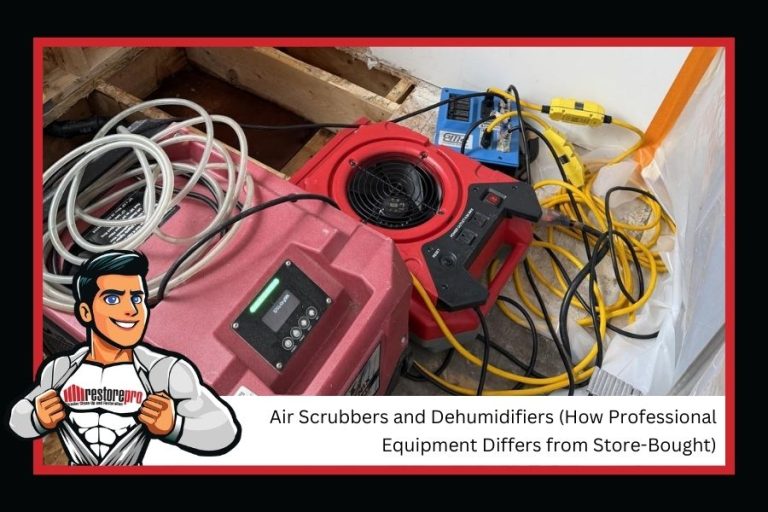
So the pipe burst, the sump pump gave out, or a washing machine hose decided to part ways with the wall. You’ve sopped up the standing water, maybe set a box fan in the corner, and dragged out the dehumidifier from the basement shelf. You’re handling it. We get it. That instinct to take charge is completely understandable.
But here’s the thing: the equipment available at your local hardware store and the gear that a professional water damage cleanup crew brings in aren’t really in the same category. They share a name but almost nothing else. And that gap matters more than most homeowners realize, especially when mold has a 24-to-48-hour window to take hold.
At RestorePro Disaster Cleanup & Restoration, we’ve been doing this work in Sandusky and across Northern Ohio for over 27 years. We’ve walked into a lot of homes where someone tried their best with store-bought gear and still ended up with a serious mold problem weeks later. This post is about explaining why that happens, and what professional equipment actually does that consumer gear simply can’t.
Dealing with water damage right now?
Professional drying equipment makes a measurable difference in the outcome. Our IICRC-certified team can be on-site within 30 to 60 minutes, any time of day or night.
Why the Equipment Gap Matters After Water Damage
Water damage is a time-sensitive problem. The longer moisture sits inside walls, under flooring, and in the air, the worse the outcome. According to the EPA’s guide to mold and moisture, mold can begin developing within 24 to 48 hours in wet conditions. Consumer equipment often can’t move fast enough to beat that clock.
It’s not about effort. It’s about capacity. A store-bought dehumidifier works fine for keeping a slightly damp basement from feeling muggy in August. It was never designed to pull 30 gallons of moisture per day out of waterlogged drywall and floor joists after a Category 2 flood event.
The IICRC, the organization that sets the industry standard for water damage restoration, outlines specific drying targets in the S500 Standard for Professional Water Damage Restoration. Meeting those targets requires equipment built for the job.
Dehumidifiers: What You Buy vs. What We Bring
Most people are familiar with the portable dehumidifiers sold at home improvement stores. They sit on the floor, hum along, and dump a bucket of water every day or two. For general humidity control, they’re adequate. For active water damage restoration, they fall short in nearly every measurable way.
Consumer Dehumidifiers
The typical consumer model pulls between 30 and 70 pints of moisture per day under ideal lab conditions. Real-world performance is usually lower. They work on ambient air in the room. They don’t reach into wall cavities, under subfloors, or inside wet insulation.
They also require frequent bucket emptying, which slows the overall drying process if a homeowner is doing it themselves overnight. And they can only cover one space at a time, which isn’t useful when moisture has migrated through multiple rooms, which it almost always has.
Industrial LGR Dehumidifiers
Professional restoration crews use what are called LGR dehumidifiers, which stands for Low Grain Refrigerant. These units are in a completely different class. A single LGR unit can extract 150 pints or more per day, even at lower relative humidity levels where standard units become ineffective.
That last part is important. Consumer dehumidifiers slow down significantly once the room humidity drops below 50 percent. LGR units keep pulling moisture efficiently down to 20 percent or lower. That matters because complete structural drying requires getting to very low moisture levels inside the materials themselves, not just the air.
Our IICRC-certified technicians use calibrated moisture meters and thermal imaging to track exactly what’s happening inside walls and under flooring. We set up multiple units working in coordinated zones, continuously draining, so drying never stops. It’s a system, not a single appliance.

Air Scrubbers: The Equipment Most Homeowners Don’t Know Exists
This is where the gap gets really wide. Most homeowners have never heard of an air scrubber, let alone owned one. A box fan moves air around a room. An air scrubber pulls all the air in a space through multiple filtration stages and returns clean, filtered air to the room continuously.
Why Air Quality Matters During Water Damage
When building materials get wet, they don’t just grow mold. They release particulates, bacteria, and in cases involving mold remediation, airborne spores that can spread to unaffected areas of the home. If the source is grey or black water, which includes sewage backups and heavily contaminated flood water, those airborne contaminants are a genuine health concern.
Box fans make this worse, not better. They push contaminated air into adjacent rooms and stir up settled particles. A professional air scrubber does the opposite.
How Professional Air Scrubbers Work
Commercial-grade air scrubbers use a series of filters, typically including a pre-filter to catch larger debris, a HEPA filter certified to capture particles as small as 0.3 microns, and sometimes an activated carbon layer for odor control. HEPA filtration captures bacteria, mold spores, and other microscopic particles that recirculate through a contaminated space.
A professional unit cycles the entire air volume of an affected room multiple times per hour. They’re placed strategically to create negative air pressure, meaning air flows toward the scrubber and out through a filtered exhaust rather than drifting into clean areas of the home. This is standard practice during any job involving mold or contaminated water.

How Professional Drying Works: A System, Not a Single Machine
💧
Moisture Extraction
LGR dehumidifiers remove 150+ pints per day, even at low humidity levels
🌀
Air Filtration
HEPA air scrubbers cycle all room air multiple times per hour, capturing spores and bacteria
📊
Monitoring & Data
Moisture meters and thermal imaging track drying progress inside walls and floors
✅
Documented Results
Drying logs provide evidence for insurance claims and confirm materials reached dry standard
Consumer vs. Professional Equipment: Side-by-Side
Here’s a clear look at how the two categories of equipment compare across the metrics that actually matter when your home has water damage:
| Category | Store-Bought Consumer Gear | Professional Restoration Equipment |
|---|---|---|
| Dehumidifier Capacity | 30-70 pints/day (ideal conditions) | 150+ pints/day, continuous drain |
| Effective Humidity Range | Slows below 50% RH | Effective down to 20% RH |
| Air Filtration | None (fans move unfiltered air) | HEPA filtration, captures 0.3 micron+ particles |
| Moisture Monitoring | Visual inspection only | Calibrated meters, thermal imaging, daily drying logs |
| Negative Air Pressure | Not possible | Used to contain contaminants and protect clean areas |
| Coverage | One room, ambient air only | Multiple zones, including inside wall cavities and subfloors |
| Insurance Documentation | None | Detailed drying logs submitted to insurer |
Why Professional Equipment Changes the Outcome
The difference between adequate drying and thorough structural drying isn’t always visible. That’s actually part of the problem. A room can feel dry and even read as lower humidity on a basic meter while moisture is still locked inside wall cavities, beneath flooring layers, and inside insulation.
That’s the moisture mold feeds on. Not the puddles, which you can see and mop up. The trapped moisture that stays in the structure for days or weeks after the obvious water is gone.
The Documentation Piece That Protects You
Here’s something that doesn’t get talked about enough: professional drying creates a paper trail. Every day, our technicians record moisture readings at specific monitoring points throughout the affected area. These drying logs document when each part of the structure reached the dry standard established by the IICRC.
That documentation matters for your insurance claim. It also protects you later. If a mold issue surfaces months down the road, proper drying logs show whether the structure was genuinely dried to standard or not. Consumer efforts leave no such record.
What This Looks Like in Practice
When our team responds to a fire damage cleanup job that involves significant firefighting water, or a basement flood in a home near Sandusky, the equipment setup isn’t just one or two machines plugged in. It’s a calculated system. Dehumidifiers are placed to create drying zones. Air scrubbers are positioned for negative air pressure containment. Moisture readings are taken at regular intervals and compared against the previous day’s baseline.
The goal is to have documented proof that every affected area, including inside the wall assemblies, has returned to normal moisture content before the equipment is ever removed.
If you want to understand more about how mold can develop when drying isn’t thorough, this overview of mold remediation and water damage restoration explains the connection in more detail. There’s also a helpful breakdown of common water damage restoration myths that covers some of the other misconceptions homeowners often run into.
Questions about drying your home after water damage?
Our IICRC-certified team serves Sandusky, Erie County, and communities throughout Northern Ohio. We’re available 24/7 and on-site within an hour.
Frequently Asked Questions
Can a store-bought dehumidifier actually dry out a water-damaged room?
A consumer dehumidifier can lower the ambient humidity in a room, but it typically can’t dry the structure itself. Water damage penetrates into drywall, insulation, floor joists, and subflooring. Those materials require high-capacity industrial drying equipment, proper airflow management, and moisture monitoring to dry to the standard required to prevent mold growth. In most cases involving actual water intrusion rather than surface condensation, store-bought gear is not sufficient for true structural drying.
What is an LGR dehumidifier and why do professionals use it?
LGR stands for Low Grain Refrigerant. These industrial dehumidifiers are designed to remove large amounts of moisture, often 150 pints or more per day, and they maintain effectiveness at low relative humidity levels where consumer units stop working well. Professional restoration teams use LGR units because water damage restoration requires reducing moisture levels inside building materials to very low targets, not just making the air feel less humid. They also run on continuous drain setups so drying never pauses for bucket emptying.
Do air scrubbers do anything a fan can’t?
Yes, significantly. A fan moves air around a room, which can actually spread airborne mold spores and contaminants further into the home. A professional air scrubber pulls all the air in a space through HEPA filtration, capturing bacteria, mold spores, and fine particulates before returning clean air to the room. During water damage restoration involving contaminated water or active mold, air scrubbers are also set up to create negative air pressure, which keeps contaminated air contained rather than migrating into unaffected areas.
How long does professional drying equipment need to run after water damage?
The drying timeline depends on the water category, how long the moisture was present before drying began, and the materials affected. Most residential water damage jobs require between three and five days of continuous drying with professional equipment. Larger losses or jobs involving saturated walls and subfloors can take longer. Professional crews monitor moisture readings daily and use those readings, compared against the IICRC drying standard, to determine when the job is complete rather than guessing based on how the room looks or feels.


