
 419-624-0198
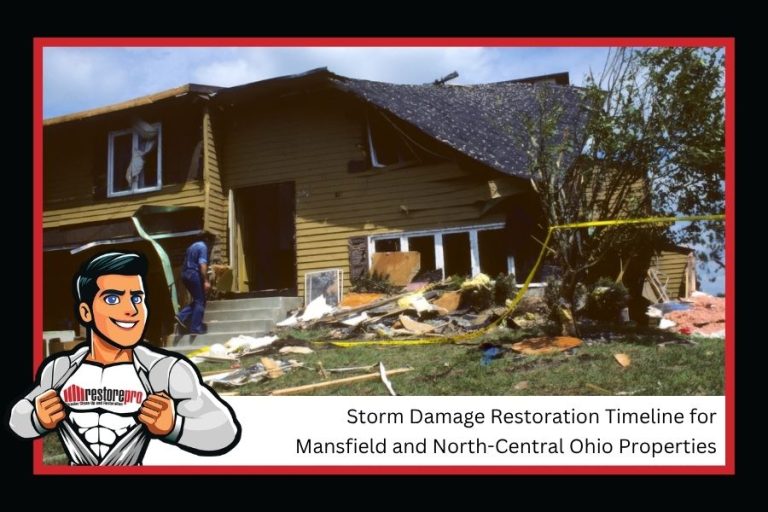
What to Expect After a Storm Hits Your Home
Severe weather doesn’t give you a heads-up before it causes damage. For homeowners across Mansfield, Bucyrus, Tiffin, and surrounding North-Central Ohio communities, storm cleanup can feel like a long, confusing process with no clear end in sight. Our crew at RestorePro Disaster Cleanup & Restoration has responded to storm damage jobs across Richland and Crawford Counties for over 27 years. The most common thing we hear from homeowners? Nobody told us how long this would take.
This guide walks you through the realistic timeline for professional storm damage cleanup and restoration after a severe weather event, so you know exactly what to expect at each stage.
Storm Hit Your Property? Don’t Wait.
Every hour water sits inside walls or flooring, the damage grows. Our IICRC-certified team reaches most North-Central Ohio properties within 60 minutes, 24/7.
One note before we start: RestorePro Disaster Cleanup & Restoration handles mitigation, cleanup, and restoration. Full structural rebuilding falls outside our scope, and we coordinate with trusted construction partners when that phase is needed. That distinction matters for your timeline, so keep it in mind as you read through each phase below.
Phase 1: Emergency Response (Hours 1-48)
The first two days are the most critical. Water spreads fast. According to the CDC’s flood recovery guidance, moisture creates conditions for mold growth within 24-48 hours, which is why an immediate response matters so much.
Here’s what happens during the emergency phase:
- Property securing – tarping damaged roof sections and boarding broken windows stops additional water from entering
- Water extraction – commercial-grade equipment removes standing water far faster than anything available at a hardware store
- Documentation – photos and moisture readings are taken before anything moves, which your insurance adjuster will need
- Hazard assessment – checking for electrical risks, sewage contamination, and structural concerns before crews work in the space
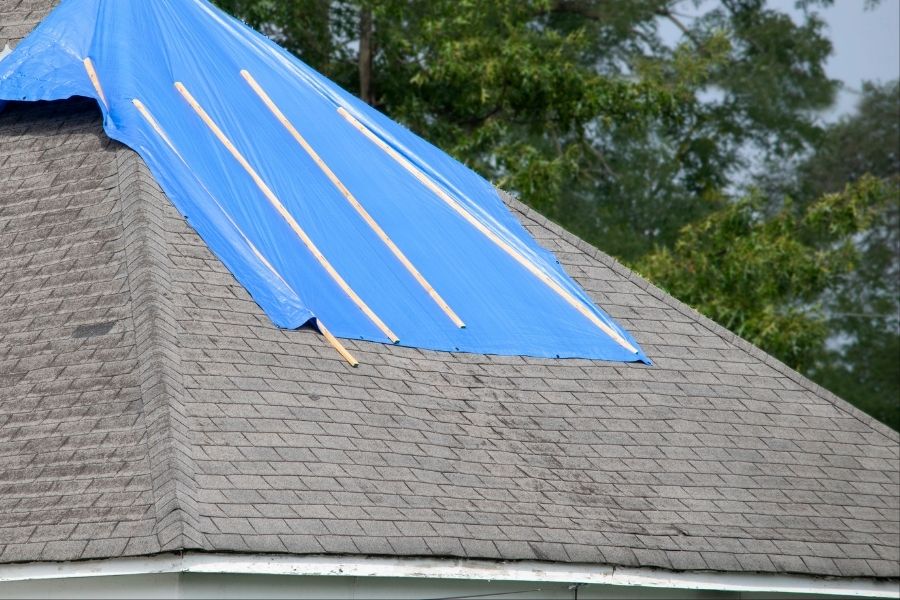
Securing a storm-damaged roof is one of the first steps our crew takes to stop additional water from entering the structure.
For Mansfield-area properties, our response time is typically within 60 minutes of your call. That speed directly affects how much of your structure and contents can be saved.
Phase 2: Structural Drying and Assessment (Days 2-7)
After water is extracted, the drying phase begins. This is the part most homeowners underestimate. Running a few box fans doesn’t get the job done. Our IICRC-certified technicians use calibrated moisture meters and thermal imaging cameras to map exactly where water has traveled inside walls, under floors, and above ceilings.
How Moisture Moves After a Storm
Hour 1
Flooring and drywall begin absorbing water
24-48 Hours
Mold spores can begin colonizing wet materials
Days 3-5
Wood framing absorbs moisture and begins swelling
Week 2+
Untreated moisture leads to structural damage and mold
A finished Mansfield basement with water-saturated drywall and carpet typically takes 5-7 days to dry completely. North-Central Ohio’s summer humidity adds extra drying time compared to cooler months. We check moisture readings daily and adjust equipment as materials dry. Pulling equipment too early is the most common reason mold appears inside walls weeks after a job looks finished. Our post on why water damage should never be ignored explains exactly how fast inaction becomes costly.
If your storm also caused fire or smoke damage from a lightning strike, soot removal and deodorization run alongside drying, extending this window by a few days.
Phase 3: Cleanup and Remediation (Days 7-21)
Once materials reach industry-standard moisture levels, cleanup and removal begins. This phase surprises homeowners because it often involves removing materials that look fine on the surface. Wet drywall rarely dries in place without developing mold inside the paper facing. Carpet padding is nearly impossible to dry properly. Both typically get removed, and the underlying structure gets treated before anything new goes back in.
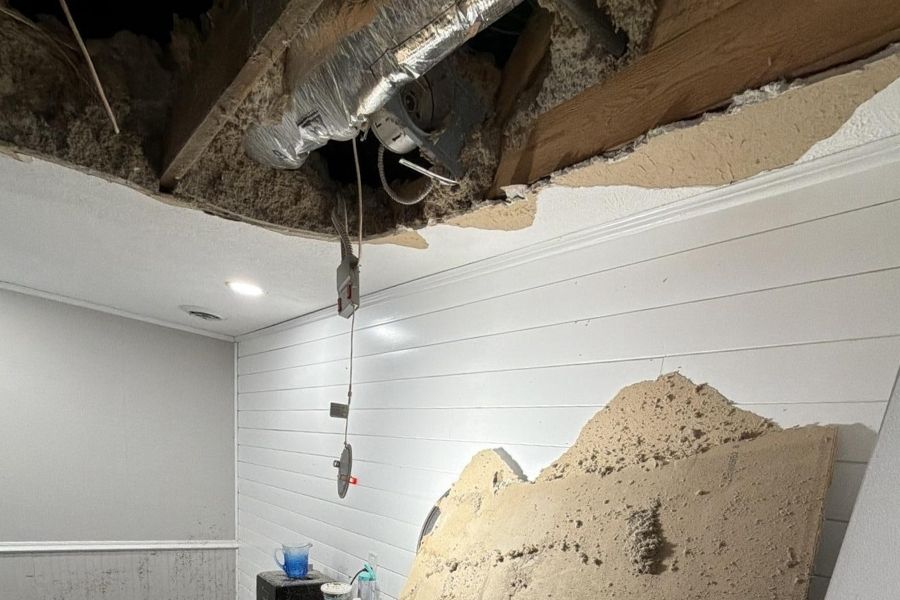
Material removal is a critical step in the cleanup phase. Saturated drywall and insulation often have to come out to prevent mold from developing behind finished surfaces.
What this phase covers depends on what the storm brought:
- Flood or roof water intrusion: Drywall removal, insulation replacement, and antimicrobial treatment throughout affected areas
- Sewage backup from overwhelmed storm drains: Full biohazard cleanup using EPA-registered disinfectants and HEPA air filtration
- Mold discovered during drying: Containment, air scrubbing, and professional mold remediation before new materials are installed
For properties across Tiffin, Norwalk, Galion, and Willard, this phase can stretch to three full weeks depending on damage scope. Properties where water sat for more than 24 hours before mitigation started require more thorough treatment. We stay upfront about what we find and what it means for your schedule.
Phase 4: Restoration and Handoff (Weeks 3-6+)
This is where cleanup ends and the path forward becomes clear. Our work wraps up with final moisture verification across all treated areas, air quality clearance when mold remediation was required, and a complete documentation package for your insurance claim. If structural work is needed, we hand off a clean, dry, treated structure to a construction partner who handles the rebuild.
For most Mansfield-area properties, total timeline runs 3-6 weeks. Major regional storm events across Richland and Crawford Counties can push that window out if demand for crews is high. The homeowners who have the smoothest experience call quickly, document everything, and don’t rush drying.
Full Storm Damage Timeline at a Glance
| Phase | Timeframe | Key Activities |
|---|---|---|
| Emergency Response | Hours 1-48 | Water extraction, property securing, documentation, hazard assessment |
| Drying & Assessment | Days 2-7 | Moisture mapping, commercial drying equipment, daily monitoring |
| Cleanup & Remediation | Days 7-21 | Material removal, antimicrobial treatment, mold remediation if needed |
| Restoration & Handoff | Weeks 3-6+ | Final moisture verification, air quality clearance, insurance documentation |
Working With Insurance After Storm Damage
Storm damage claims can get complicated fast. Roof damage from wind is typically covered under a standard homeowners policy, but the resulting water intrusion inside your home may depend on how quickly you documented and mitigated the situation. That’s why we encourage Mansfield-area homeowners to call us before filing a formal claim.
RestorePro Disaster Cleanup & Restoration participates in a “Call Before You Claim” program that helps you understand what you’re dealing with before anything gets filed. We document everything from hour one and communicate directly with adjusters to keep the process moving. Homeowners who skip documentation often find themselves with disputed claims weeks later.
If you’re working through the insurance side of things, our guide on how to file a water damage insurance claim that gets approved walks through the documentation process step by step. And if you’re in the Mansfield area, learn more about local service coverage on our Bucyrus service area page.
Frequently Asked Questions
How long does storm damage restoration take in North-Central Ohio?
Most storm damage restoration projects in the Mansfield and North-Central Ohio area take between 3 and 6 weeks from initial response to final clearance. The timeline depends on how much water entered, what materials were affected, how quickly the response began, and whether mold remediation is required.
Can I stay in my home during storm damage cleanup?
It depends on the damage. In many cases homeowners can remain in unaffected areas during drying and cleanup. If sewage backup, significant mold, or structural instability is involved, temporary relocation is strongly recommended for health and safety reasons. Your restoration crew will assess this at the start of the job.
What is the difference between mitigation and reconstruction after storm damage?
Mitigation covers stopping further damage, extracting water, drying the structure, removing damaged materials, and treating for mold or contamination. Reconstruction covers rebuilding structural elements. RestorePro Disaster Cleanup & Restoration handles mitigation and cleanup, while trusted construction partners handle the physical rebuild.
Does finding mold during storm cleanup extend the timeline significantly?
Yes. Mold remediation adds containment, HEPA air scrubbing, removal of colonized materials, antimicrobial treatment, and clearance testing before restoration can continue. How much time it adds depends on how widespread the growth is. Calling for help quickly after a storm reduces the likelihood of significant mold development.


